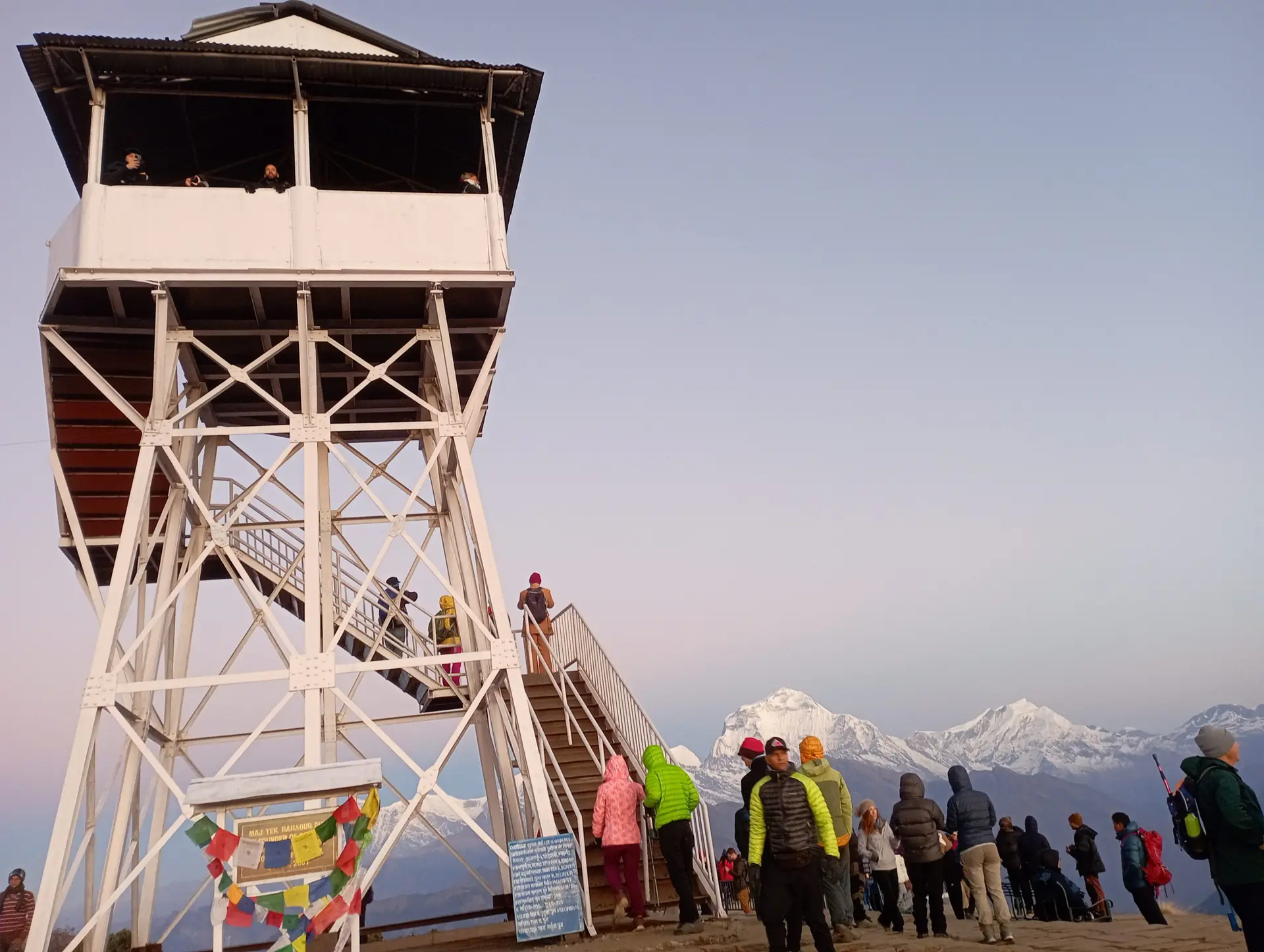
A walking holiday sounds simple: you walk, you eat, you sleep. In practice the trips in our catalogue range from a gentle week of mostly flat walks in Mallorca to a midnight summit push on Kilimanjaro at 5,895 m. They share a rhythm, but the effort, comfort and price vary enormously. Here is what to expect before you book your first one.
Table of Contents
The short answers
- What's included? On most guided treks: a guide, porters, permits, accommodation and full board while you're on the trail, plus airport pickups. Hotel nights in the gateway city usually include breakfast only, and sightseeing entrance fees are often excluded.
- What does it cost? In our listings, from around USD 420 for a nine-day Nepal trek in a large group to USD 2,530 for a seven-day Kilimanjaro climb. The full table is below.
- What about two people? The Nepal treks price on a sliding scale, and a pair falls into the "group of 2" tier, for example USD 520 on the Poon Hill trek against USD 690 solo. Confirm with the operator whether the figure is per person, and ask for the total in writing.
- Can I have my own room? Usually, for a supplement. The Mallorca hiking weekend is USD 699 for a private room against USD 559 twin share; the Albania retreat is EUR 589 single against EUR 545 shared. On teahouse treks, expect simple shared facilities higher up whatever you pay.
- How fit is the group? It depends on the trip, not the people. Easy routes attract mixed groups; routes over 4,000 m attract people who have trained for them. Pick the trip that matches you and the group tends to match too.
What a typical day looks like
On a teahouse trek in Nepal
The Nepal treks we list follow the same pattern. The first day or two are spent in Kathmandu, with a guided tour of the valley to let you recover from the flight. Then you transfer towards the mountains, by tourist bus to Pokhara for the Annapurna routes or by flight to Lukla for Everest.
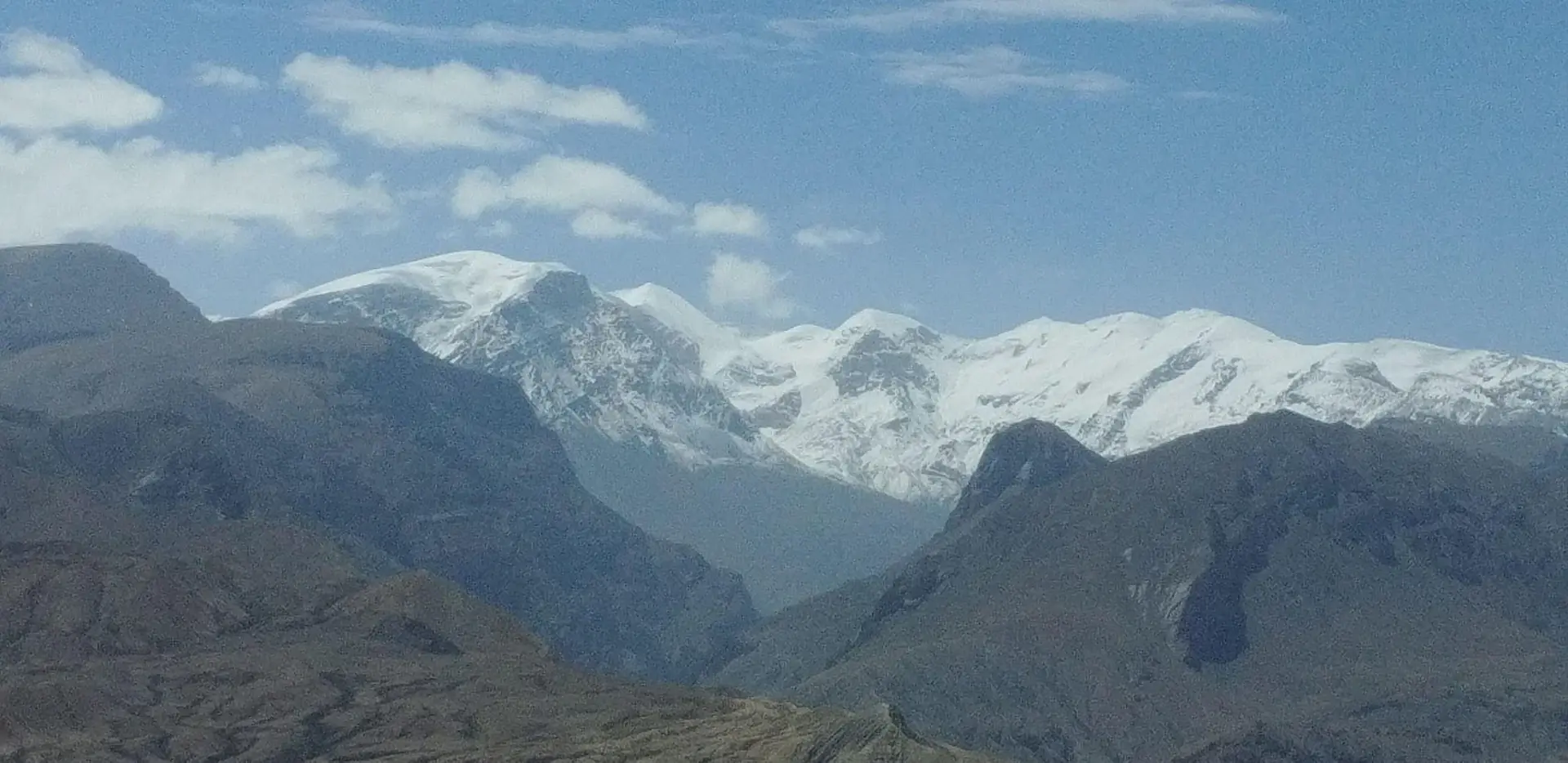
Hiking & Walking Holidays in Kathmandu
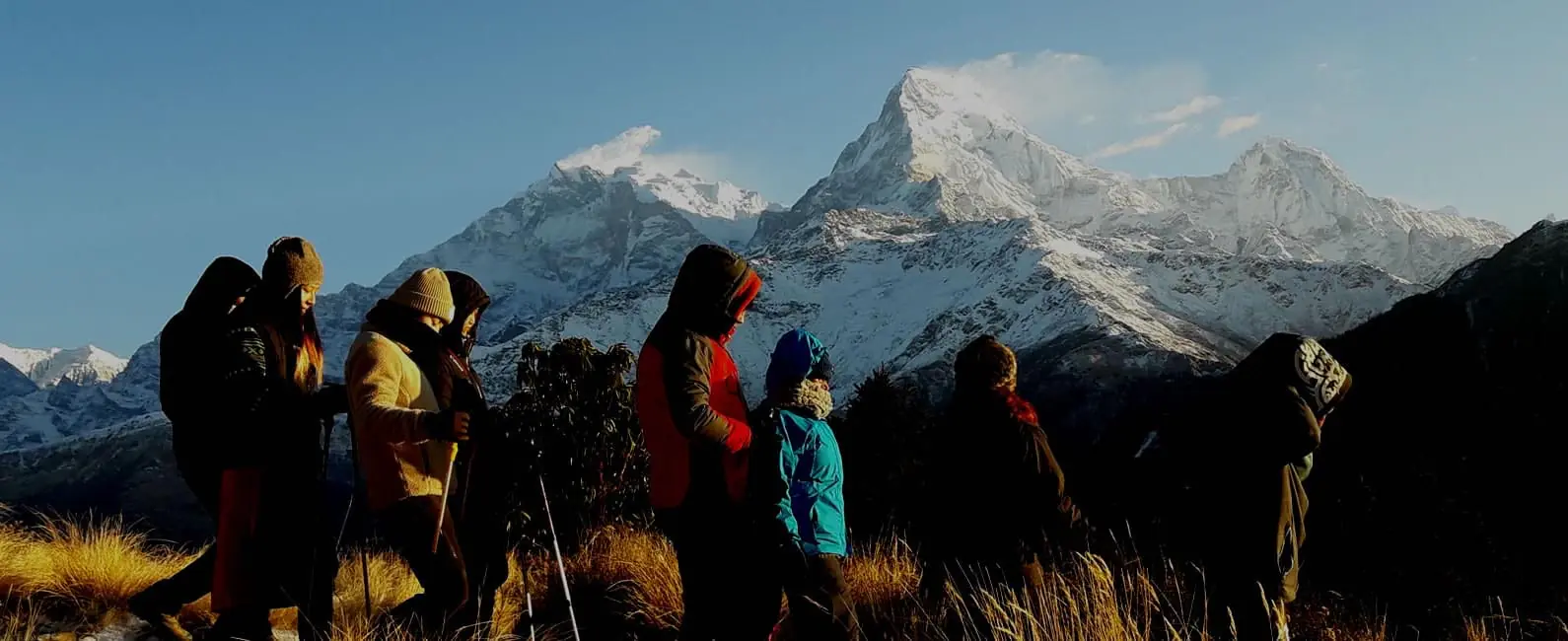
Once you're walking, the day goes like this: breakfast at the lodge, then you set off with your guide carrying only a daypack. Your main bag travels in a duffel with the porters, one porter for every two trekkers. You walk for several hours, stop for lunch on the trail, and arrive at a teahouse or lodge in the afternoon. Dinner is simple and filling, with dal bhat as the staple and momos, thukpa and noodles on many menus. Rooms get plainer as you climb: a bed, blankets and shared facilities.
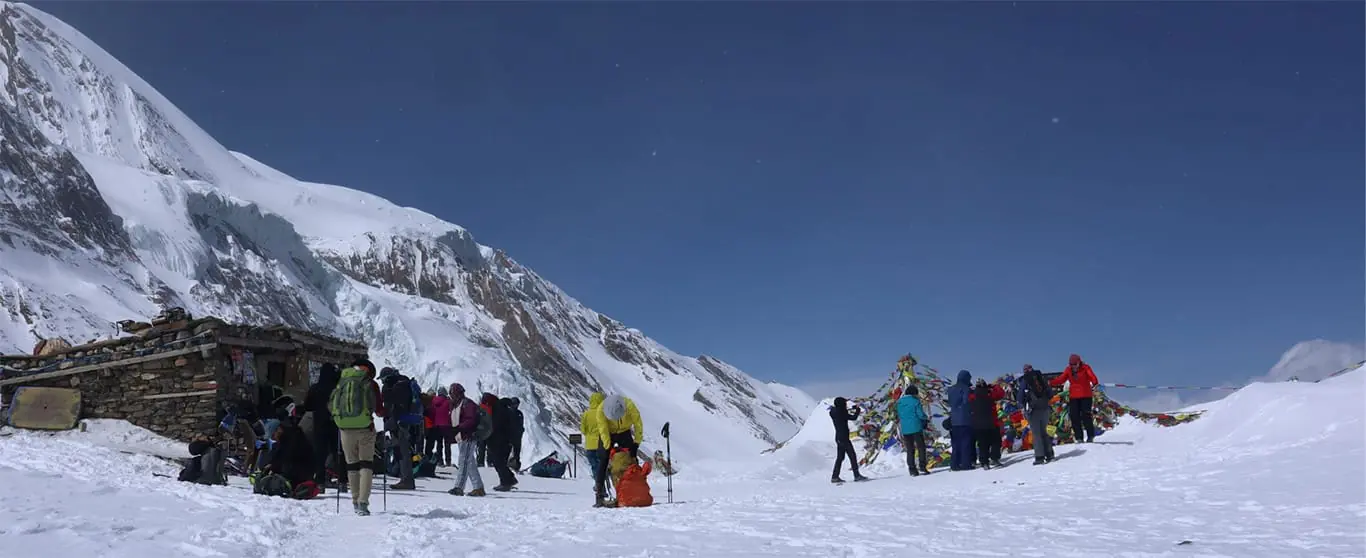
Built into the longer routes are acclimatisation days, where you rest or take a short hike higher and sleep lower. The Everest Base Camp Trek has two, at Namche Bazaar and Dingboche; the Annapurna Circuit pauses at Manang before the Thorong La Pass at 5,416 m. Those days aren't padding. They are what makes the high day possible.
Hiking & Walking Holidays in Kathmandu you can book
- ✓ Airport pickup and drop-off by private vehicle
- ✓ Jeep transfer from Muktinath to Jomsom
- ✓ 3-star hotels in Kathmandu and Pokhara with breakfast
- ✓ Tourist bus Kathmandu-Pokhara-Kathmandu
- ✓ Airport and hotel pickups and drop-offs
- ✓ 3-star hotels in Kathmandu and Pokhara with breakfast
- ✓ Local transport to Besisahar and shared jeep to Dharapani
- ✓ Flight from Jomsom to Pokhara
- ✓ Airport pickup and drop-off
- ✓ 3-star hotel accommodation with breakfast in Kathmandu and Pokhara
- ✓ Teahouse or lodge accommodation with breakfast, lunch and dinner du…
- ✓ Kathmandu Valley sightseeing (4 to 6 hours)
| Retreat | Where | Length | From |
|---|---|---|---|
| Upper Mustang Trek - 16 Days | Upper Mustang, Nepal (starts and finishes in Kathmandu) | 16 days | US$1,020 |
| Road Free Annapurna Circuit Trek - 14 Days | Annapurna region, Nepal (starts and finishes in Kathmandu) | 14 days | US$640 |
| Mardi Base Camp Trek - 11 Days | Annapurna region, Nepal (starts and finishes in Kathmandu) | 11 days | US$460 |
On a shorter trek or a walking week
The Rwenzori nature trek in Uganda packs a lot into three days: 5 to 9 hours on foot each day through forest, bamboo, bog and giant alpine plants, sleeping at John Matte Camp at 3,505 m. Rubber boots, sleeping bags and meals are provided, and a mountain chef cooks.
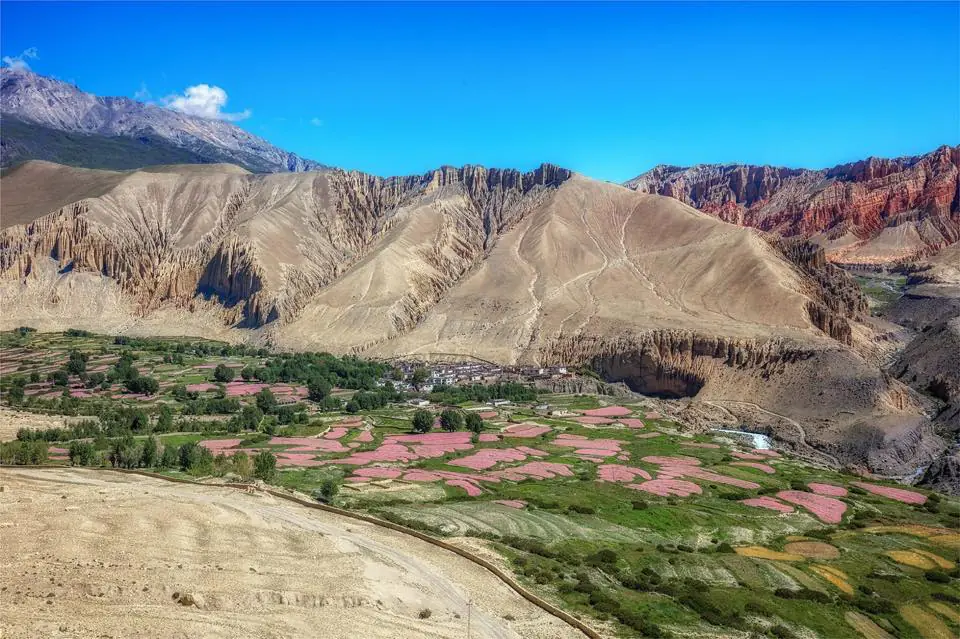
At the gentle end, the Mallorca Walking Holiday is eight days of easy walks, most of them flat, with a private driver to every starting point. You walk for a few hours with breaks, and the rest of the week fills with yoga on three mornings, markets, a wine tasting and an afternoon in Palma. The whole hotel is reserved for a group of eight.
What it costs: the listings side by side
| Trip | Length | Price from | Best for |
|---|---|---|---|
| Ghorepani Poon Hill Trek | 9 days | USD 420 (group of 11 to 20) | A first Himalayan trek, top out at 3,210 m |
| Mardi Base Camp Trek | 11 days | USD 460 | Fit walkers with some hiking behind them |
| Annapurna Base Camp Trek | 14 days | USD 590 | Poon Hill plus the Annapurna Sanctuary at 4,130 m |
| Road Free Annapurna Circuit | 14 days | USD 640 | Strong trekkers wanting a high pass |
| Everest Base Camp Trek | 15 days | USD 960 | Intermediate trekkers set on Everest |
| Rwenzori Mountains Nature Trek | 3 days | USD 500 | Long, wild days without a long trip |
| Mallorca Hiking Weekend | 2 nights | USD 479 to 699, by room and group | A weekend test of whether you like it |
| Mallorca Walking Holiday | 7 nights | EUR 895 | Easy walking with food and culture |
| Yoga, Hiking and Thermal Springs, Albania | 2 nights | EUR 545 | A short mix of yoga, Qi Gong and one guided hike |
| Fuerteventura Yoga, Hiking and E-Biking | 4 nights | EUR 990 | Sun, beach yoga and day excursions |
| Kilimanjaro via Machame | 6 to 9 days | USD 2,224 | A summit goal at 5,895 m |
Two things move the price most. The first is group size: on the Nepal treks a solo booking costs well over the large-group rate (USD 1,690 against USD 960 for Everest Base Camp). The second is time at altitude: the Kilimanjaro 7-day climb costs USD 2,530 against USD 2,224 for six days, and the extra night at Karanga Camp is there to improve acclimatisation and your chance of reaching the top. On a mountain that high, that's usually money well spent.
How to tell a good trip from a poor one
- Acclimatisation is in the itinerary. Anything going above about 4,000 m should show rest or climb-high-sleep-low days, not just a straight line up.
- Staff are looked after. Look for porter numbers stated plainly and staff insurance, food and lodging included. Several of the Nepal listings spell this out.
- Safety kit is named. A medical kit carried by the guide is the minimum; the luxury Kilimanjaro option adds pulse oximeters and emergency oxygen.
- Guided means guided. Read the small print. The Mallorca weekend describes its Saturday trek to Lluc as self-guided on a waymarked route, with drop-off and pickup. That suits confident walkers, but ask exactly which days a guide walks with you.
- The exclusions are honest. Entrance fees, tips, travel insurance and drinks are common extras. A good operator lists them; a poor one leaves you to find out.
Who gets the most from it
People who enjoy being outside all day and don't need much else. The reward is cumulative: by day four of a trek your legs know the routine, the views keep changing and the evenings are simple and sociable. It also suits people who want a holiday where every logistical decision is made for them. Once you land, transfers, permits, meals and beds are handled.
You don't need to be an athlete for the easier routes. The Poon Hill trek is described as short and easy, and the Mallorca walking week is mostly flat. You do need to be able to walk for several hours on consecutive days without it becoming a misery. If that's in doubt, do a few long weekend walks at home with a loaded daypack before you commit.
Who this is not for
- Anyone wanting a structured training programme. These trips are about covering ground, not sets and reps. If you want coaching and measurable fitness, look at a training camp instead, such as the trail running camp in Davos, which includes lectures on performance and injury prevention.
- People who want comfort every night. Teahouses and mountain camps are basic. Hot showers, private bathrooms and quiet rooms are not guaranteed above the first few days.
- Anyone with knee, heart or breathing problems who hasn't checked with a doctor. Long descents punish knees, and altitude affects people unpredictably, regardless of fitness.
- People who would rather base themselves somewhere and train daily. A trek moves every day. If you want a fixed base with a gym or classes, a residential fitness retreat is the better fit.
Choosing your first one
If you've never done a multi-day walk, start short or start low. A weekend in Mallorca or three days in Albania will tell you whether you like the rhythm. If you're drawn to the Himalaya, the Poon Hill trek gives you the full teahouse routine without serious altitude, and it uses the same opening days as the Annapurna Base Camp trek if you want to go further next time. Save Everest, the Thorong La and Kilimanjaro for when you know how your body handles long days on your feet. December departures in Nepal tend to bring clear skies and cold nights at height, so pack proper warm layers.
Ready to go?
We list 8 hiking & walking holidays in Kathmandu, with dates and prices you can compare and book with a small deposit.
See all 8 in Kathmandu →