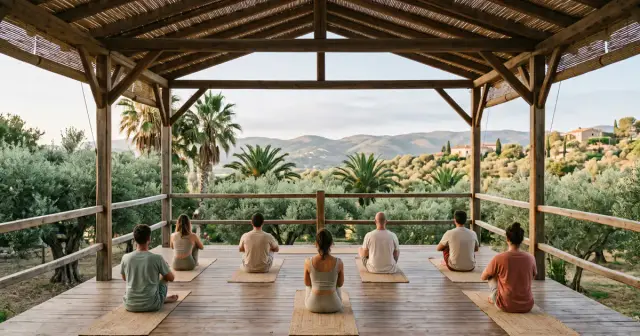
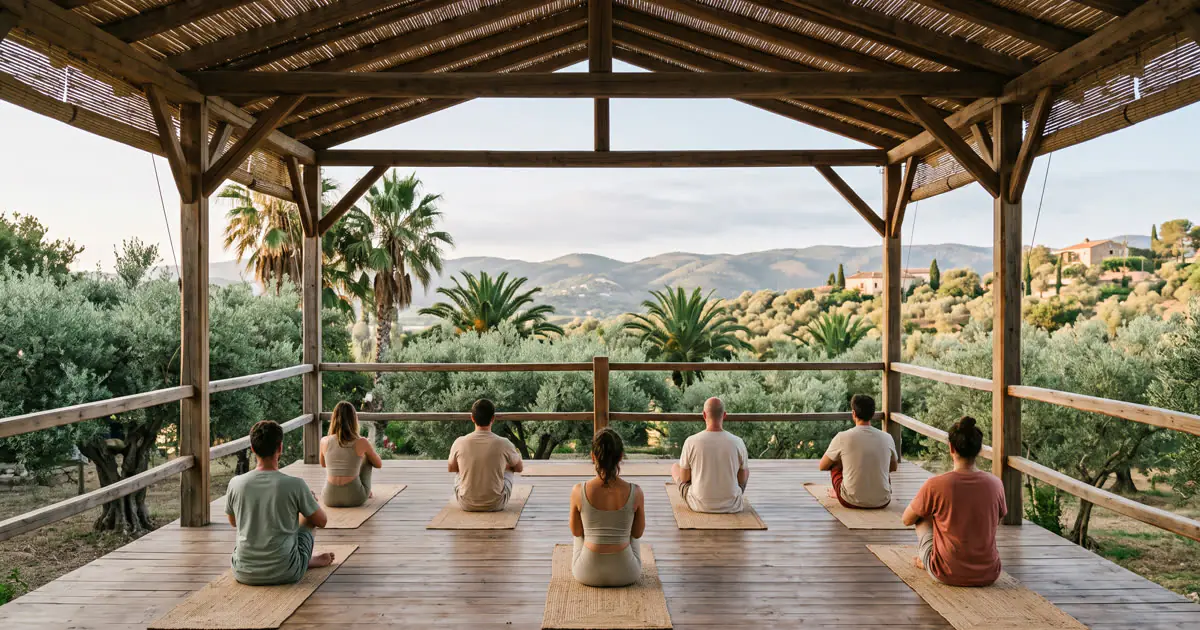
A typical day runs like this: 07:00 breathing exercises, a short seated meditation and 90 minutes of flow; 09:30 a late breakfast or brunch; 10:30 free time for the beach, a walk, a massage or a nap; 13:30 a light lunch, often optional; 16:30 a workshop on something specific such as alignment or breath; 17:30 a calm evening session — Yin, Restorative Yoga or Yoga Nidra; 19:30 dinner, usually vegetarian, then early to bed.
What separates a good week from a mediocre one is the style, not the setting. Vinyasa is flowing and warming. Hatha is slower with longer holds. Yin is passive and still. Alignment-focused classes work precisely with props. Ashtanga follows a fixed, demanding sequence. If a listing only says "yoga for all levels", ask which style the teacher actually teaches.
Group size matters too. With eight to sixteen people the teacher can see everyone; past twenty the classes start to feel like a studio course. Look for a practice space that is covered, quiet, shaded or heated depending on the season, and stocked with enough mats, blocks, straps and bolsters for the whole group. A real timetable — times, styles and which sessions are optional — should be published before you book.
On the teaching side, yoga is not a regulated profession in most countries. The usual entry qualification is a 200-hour teacher training, with 300 or 500 hours representing further study. Those numbers describe training hours, not ability, and directory listings are usually self-reported. The questions worth asking are how long the teacher has taught groups, whether they have led retreats before, and whether they have trained in anatomy and in teaching people with injuries. Hands-on adjustments should always be optional, and many teachers now ask at the start of class.
Practicalities: five to seven nights is the standard length, with a long weekend giving you a taste and a week letting the rhythm settle. Around the Mediterranean, spring and autumn are the pleasantest seasons; in Thailand it is roughly November to February. Pack layers for cool mornings, clothes you can move and sit in, a light scarf for relaxation, a refillable bottle and a book. Most venues provide mats.
As a rough guide for 2026, a week in Europe usually costs around €800 to €2,000 per person in a shared room with meals, excluding flights. A single room often adds €150 to €500 per week, and remote or luxurious houses sit well above that. If sleep is your main reason for travelling, book your own room — shared is cheaper, but a snoring roommate costs you more than the supplement.
What's included
- Five to seven nights on site at the retreat venue
- One or two guided yoga sessions daily, led by the same teacher or a small team
- Morning breathing exercises and a short seated meditation
- A longer active morning practice, often 90 minutes of Vinyasa or Hatha
- A quieter late-afternoon session: Yin, Restorative Yoga or Yoga Nidra
- Workshops on themes such as alignment or breath
- Meals, often vegetarian, including breakfast or brunch and dinner
- Use of mats and props at the venue
What's not included
- Flights and travel to the venue
- Airport transfers, unless the individual retreat states otherwise
- Single room supplement, typically €150 to €500 per week
- Massages, cooking classes and sound baths, often charged extra
- Treatments and therapies not listed by the individual retreat
- Travel insurance
- Personal expenses
More wellness retreats in Indonesia